 |
|
|
 |
||
|
|
|
|
||
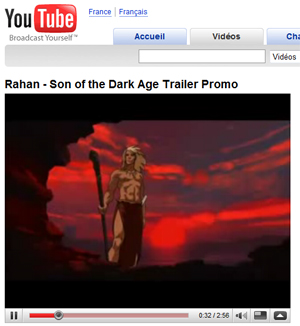
English pages about Rahan, great french comics.
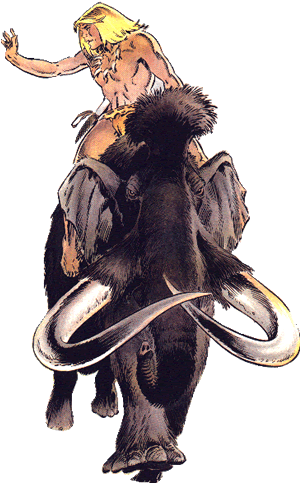 |
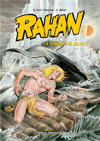
Created by Roger Lecureux and Andre Cheret, Rahan is a comics caractere published in Pif Gadget Magazin for the first time, about 1969. Rahan is a hero of more 180 stories, short (11 pages) or great (about 40 pages) all stories is now in 24 books (only in french version for the moment) more 3500 pages in total. Adapted in cartoon for TV (26x 26 minutes) only in french to. Rahan is very popular in France,he is a classical comics. Just now Rahan have a lot of news, new stories from a new editor and any product about this hero: Toys, pictures, statuette, expose ... and some projects: films and new cartoons ... If you have a editing in a no french language, please contact me with message or an . |
 |
|
|
|
||
 |
|
||||
|
|
||||
 |
|
||||
|
All in lot of news : Statuette, exposition, cartoons in video ... (in french) |
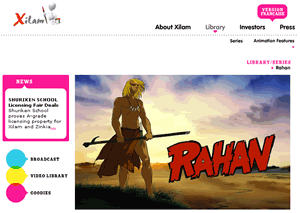 |
New cartoon, by Xilam at the TV in 2009, on France 3 for France see on Xilam web site |
The Coen brothers use Larry’s profession to reinforce this theme. Larry teaches Heisenberg’s Uncertainty Principle and the paradox of Schrödinger’s cat, concepts that suggest the fundamental nature of reality is unpredictable. While Larry can solve complex equations on a chalkboard, he cannot apply that logic to his own life. The film’s recurring motif of "Hashem" (God) acting through silence suggests that the search for divine answers is a fool's errand. The rabbis Larry consults offer no comfort; they provide platitudes or bizarre anecdotes, like the story of the "Goy’s Teeth," which ultimately conclude that knowing the "why" is less important than simply living.
At the heart of the film is the Jewish concept of midrash—the process of interpreting biblical stories—but here, the interpretation leads only to more questions. Larry is a modern-day Job, besieged by a divorce request from his wife, a blackmail attempt by a student, and a brother whose eccentricities teeter on the edge of criminality. Larry’s constant refrain, "I haven't done anything," highlights his belief in a transactional universe where being a "serious man" should shield him from suffering. His tragedy lies in his inability to accept that virtue does not guarantee security. Un tipo serio
In the end, Un tipo serio offers no resolution. It concludes with a looming storm and a dire medical phone call, suggesting that just as Larry begins to find a semblance of peace, the universe strikes again. The film is a profound meditation on the limitations of human understanding. It suggests that being a "serious man" is not about finding the answers to life’s mysteries, but about finding the resilience to endure the uncertainty. The Coen brothers use Larry’s profession to reinforce
The film Un tipo serio, directed by Joel and Ethan Coen, is a masterclass in existential dread masked as a dark comedy. Set in 1967, the story follows Larry Gopnik, a mild-mannered physics professor whose life unravels through a series of inexplicable misfortunes. Through Larry’s descent into chaos, the Coen brothers explore the human struggle to find meaning in a universe that appears indifferent, silent, or even outright hostile. The film’s recurring motif of "Hashem" (God) acting
The film’s cinematography and sound design heighten this sense of impending doom. From the rhythmic scraping of a doctor’s tools to the distant howl of a coming tornado, the atmosphere is thick with tension. The prologue—a folk tale about a dybbuk—sets the stage for a world where the supernatural and the mundane are uncomfortably intertwined. It suggests that whether or not there is a spiritual cause for our suffering, the impact remains the same.
|
Last
update : November 2008
|
About this web site in french |
|
|
|
|
|